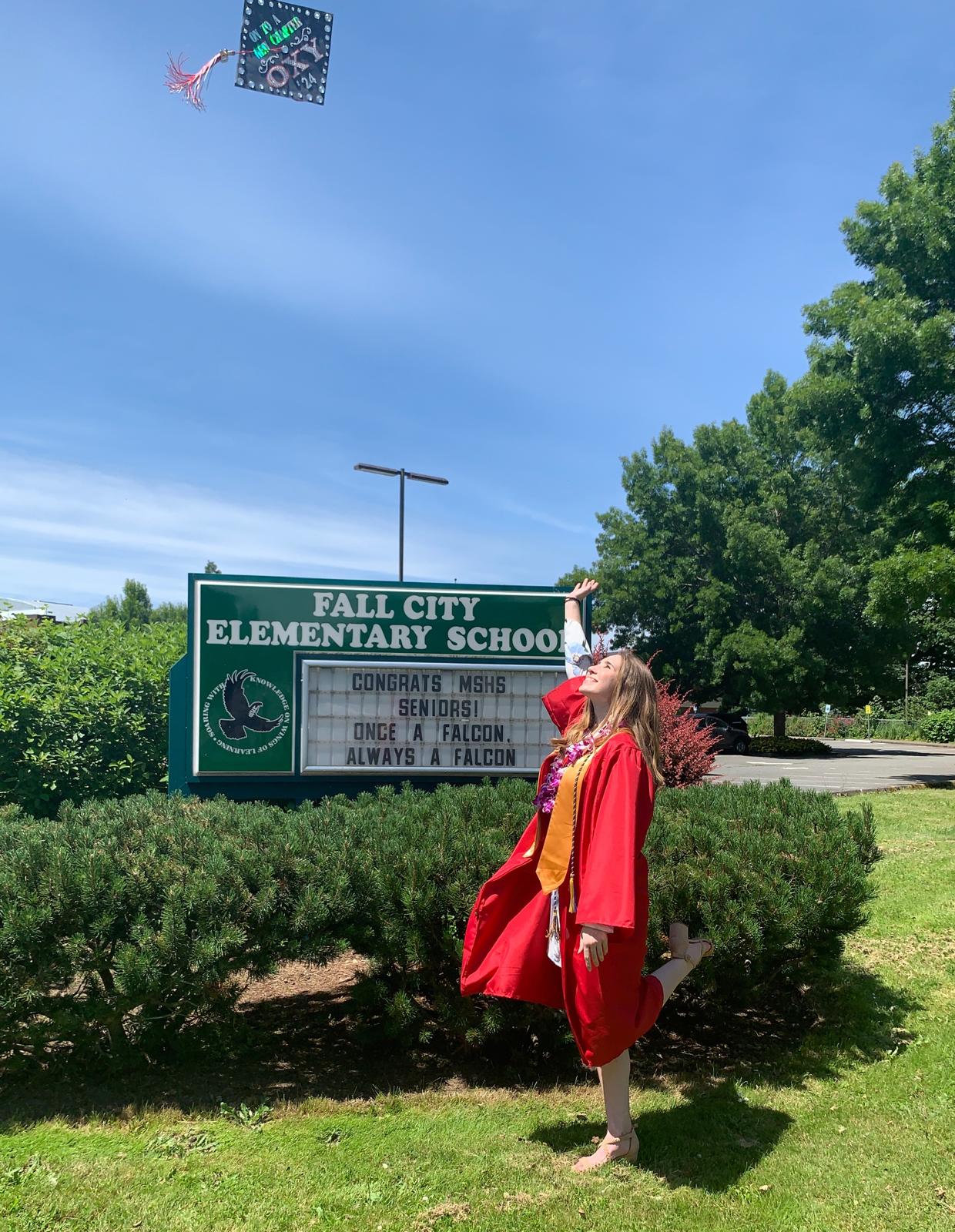
Fall City, Washington - about thirty miles east of Seattle, population not much to speak of - is where I grew up after my family moved from Australia, and where I’ve landed again, at least for now. It’s a strange thing, returning to a small town after years spent in Los Angeles, New York, Tunis, Dublin, and Palermo - but it’s been a useful place to think about what comes next.
Growing Up Here
I attended Mount Si High School, where I graduated with honors and first started to channel the curiosity that had followed me from Australia into something more structured. High school is where I began engaging seriously with history and politics. I developed strong passions for my AP history classes and remember the thrill I felt when I finally got to take AP Comparative Government and Politics my senior year. I developed strong research and communication skills through my time on the speech and debate team, found my voice (quite literally) on the stage with the choir, and learned to work through fear and mental blocks in pole vault. The Pacific Northwest, and Snoqualmie Valley especially, is a particular kind of place to develop that sensibility: progressive in its self-image, complicated in its history, surrounded by landscapes that make you feel both very small and very present.
The move from Australia to Washington State as a child was the first real experience I had of being between two places - carrying one set of reference points while learning another. That experience of navigating between contexts became something I returned to professionally, first when I studied abroad in Tunisia and later when my research took on an explicitly comparative structure across the US and UK. But it started here, in the specific disorientation and recalibration of being a kid from the Southern Hemisphere, figuring out a new version of normal in the foothills of the Cascades.
Coming Back
Returning to Fall City after my MPhil is less a homecoming than a holding pattern - coming back to a place that shaped you but no longer reflects who you’ve become, while you figure out what’s next. The town is the same; I’m not. That gap is clarifying in its own way.
There’s a coffee shop in Fall City called Aroma that I’ve always loved. I’ve visited cafes around the world, including ones that are world-renowned, but Aroma will always be my favourite. Recently, I’ve been having them make me Australian flat whites - a small act of merging the two places I come from that feels more meaningful than it probably should.
There’s something in the ritual of it: ordering a drink that doesn’t quite belong here, in a shop that’s been part of my American life for several years, while planning a career that doesn’t quite fit in either place. It’s a minor thing, but it captures something true about how I move through the world - always drawing from more than one context, always a little bit between.
The Museum
One of the unexpected gifts of being back in the Seattle area has been the time to revisit the Seattle Art Museum. I think the last time I visited, before my first move out of Washington state, was when I was a fourth grader. On a recent visit, I found myself standing between the Pacific Northwest Native American collection and an exhibition of Australian Aboriginal art - two Indigenous artistic traditions, from the two places I’ve called home, displayed side by side.
It was one of those moments where the personal and the analytical collapse into each other. I study how identity, belonging, and exclusion are constructed across different national contexts. I research the rhetorical strategies that movements use to define who counts and who doesn’t. Here were two traditions - separated by an ocean, connected by colonial histories and by ways of understanding land, kinship, and time that predate and outlast the national borders I was raised inside - speaking to each other across a gallery floor.
What struck me wasn’t just the resonance between the two collections but the fact that seeing them together felt like something only my particular life could have prepared me for. Someone who’d only lived in one of those places would experience the exhibition differently. The double recognition - I know something about both of these contexts, and I know something about the space between them - is the same instinct that drives my research. The ability to see patterns across contexts, to hold two frames simultaneously, to notice what rhymes and what doesn’t - that’s not just an intellectual skill. It’s something that started with being a kid from Sydney who grew up in Fall City.
What This Place Is
Seattle is a complicated place for me, as can often be the case with childhood hometowns. Since my return, however, I have been building a new relationship with the city. I venture into Seattle itself more often than I used to, availing myself of as much of the public transportation as is feasible. The roles I’m building toward are in policy hubs, tech centres, and international institutions that are mostly elsewhere. I’ve changed a lot since I last lived here full-time, and being back has been a reminder of how much - but it’s also been a chance to see where I started with fresh eyes.
It’s still where I’m from, and that matters. The accumulation of places - each one adding a layer to how I see the world, each departure sharpening the picture - is the thing that connects all of them. The willingness to keep moving, keep arriving somewhere new and paying attention to what I find, started here.
From the archive
Gallery
A few visual notes from the place that still feels most plainly like home.